Eat It! 大学生食物管理 AppEat It! Student Food App
先研究,后设计Research first, design later
- 项目背景:课程课题为减少大学生食物浪费。小组对 8 名自己做饭的学生做一周日记研究和访谈,3 人认为详细记录太繁琐。
- 工作内容:负责 2 名参与者的招募、访谈和日记跟进。针对“记录太繁琐”,独立将小组方案开发成可直接使用的网页 App:做饭后用语音说一句就扣减食材,没说数量会追问;可以标出不在家吃的日子,提前提醒吃掉临期食物。
- 项目结果:网页 App 已公开可用(拍小票、扫码识别待接入);小组调研报告 85.33/100,获最高档 H1。
- Course brief: reduce food waste among university students. Our team ran a one-week diary study and interviews with 8 students who cook; 3 of them found keeping track of food too much effort.
- Recruited, interviewed and followed the diaries of 2 participants. To cut that effort, built the group's design on my own into a working web app: say by voice what you cooked and it takes the ingredients off, asking how much is left when you give no amount; mark the days you eat out and it reminds you to eat what expires first.
- The web app is publicly usable (receipt and barcode recognition not yet connected); fieldwork report 85.33/100, an H1 (top band).
与 AIO 的关系 · 计划中Connection to AIO · planned
Eat It! 仍是独立的课程团队项目。我计划把食物记录的思路延伸到Eat It! remains an independent team coursework project. I plan to carry its food-recording ideas into AIO 的饮食管理food management in AIO;目前这里展示的是课程项目,还没有接入 AIO。; this page presents the coursework, and does not imply that integration is complete.
- 我的角色My role
- 小组成员;负责 2 名参与者的招募、访谈和日记跟进;把组内设计做成网页 AppTeam member; recruited, interviewed and followed up 2 of the 8 participants; built the group's design as a web app
- 作业要求The brief
- 先做田野研究、从证据里提需求,再出设计Field research first, requirements from evidence, then a design
- 时间When
- 研究 2026.08–09;设计和概念视频 2026.10Research Aug–Sep 2026; design and concept video Oct 2026
- 方法Methods
- 半结构访谈、一周日记研究、亲和图、用户画像Semi-structured interviews, one-week diary study, affinity mapping, personas
- 产出Output
- 6 个主题、2 个用户画像、一组设计需求6 themes, 2 personas, a set of design requirements
从招募到需求From recruitment to requirements
- 招募 8 名学生Recruit 8 students
- 访谈Interview
- 一周日记One-week diary
- 回访Follow-up
- 亲和图Affinity board
- 6 个主题、2 个画像6 themes, 2 personas
- 设计需求Design requirements
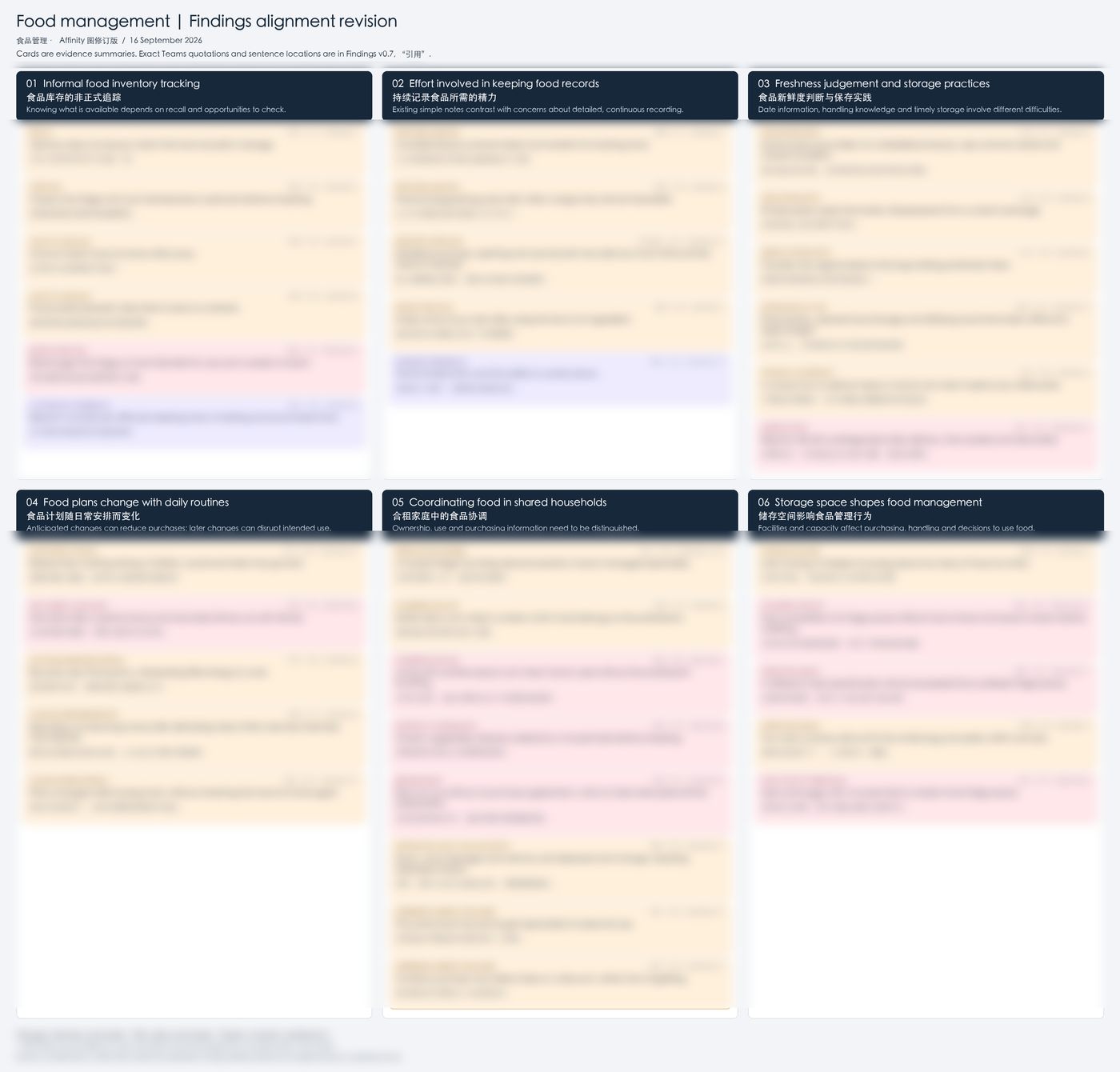
亲和图上的 6 个主题Six themes from the affinity board
每张卡片是一条证据摘要,来自访谈或日记。参与者已匿名(P1–P8),网站上不放任何原话,所以卡片内容做了模糊处理,只保留主题。Each card summarises one piece of evidence from an interview or a diary. Participants are anonymised (P1–P8) and no quotes are published here, so the card text is blurred and only the themes are kept.
- 非正式的库存追踪Informal food inventory tracking家里有什么,靠记忆和顺手看一眼。Knowing what is available depends on recall and chances to check.
- 持续记录太费精力Effort involved in keeping food records简单的笔记有人在用,但详细、持续地记录让人担心。下面第 1 条需求就来自这里。Simple notes exist, but detailed, continuous recording worries people. Requirement #1 below comes from here.
- 新鲜度判断与储存Freshness judgement and storage practices日期信息、处理知识和及时储存各有难处。Date information, handling knowledge and timely storage each cause trouble.
- 计划随日常变化Food plans change with daily routines预料到的变化会少买,临时变化会打乱原计划。Expected changes reduce buying; sudden changes disrupt intended use.
- 合租家庭里的协调Coordinating food in shared households谁的、谁在用、谁去买,需要分清楚。Ownership, use and purchasing need to be told apart.
- 储存空间影响管理Storage space shapes food management设施和容量影响购买、处理和先用哪些食物。Facilities and capacity affect purchasing, handling and decisions to use food.
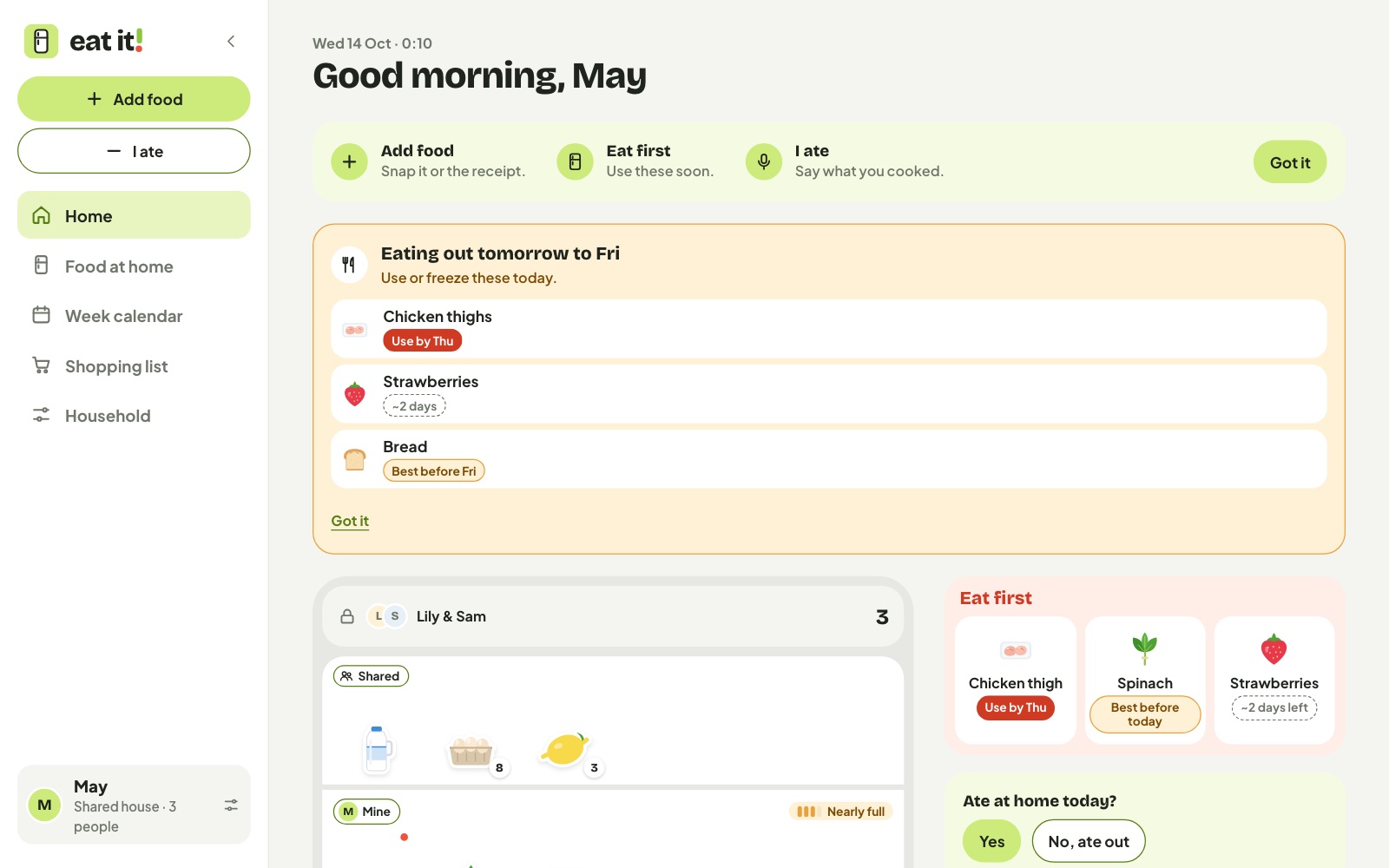
把组内设计做成可以直接使用的网页 AppThe group's design, built as a working web app
语音出库能直接用;拍照会打开摄像头,但识别结果是模拟的。打开时里面放的是编好的示例数据。Voice works for real; the camera opens, but recognition is simulated. It opens with made-up sample data.
一条发现怎么变成需求How a finding became a requirement
8 人中有 3 人觉得详细记录食物太费劲。所以第 1 条设计需求定为“低负担、可修改的记录”:先让人愿意记,记错了能改,而不是追求一次记全。到了设计阶段,这条需求变成了“尽量不用打字”:入库靠电子小票、拍照或扫条码,出库全靠语音(网页 App 里拍小票、扫码识别还待接入)。3 of the 8 found detailed food logging too much effort. So design requirement #1 became low-effort recording that users can correct: get people to log at all and let them fix mistakes, rather than demand complete records. In the design stage this became “avoid typing”: food comes in from e-receipts, a receipt photo or a barcode, and goes out by voice.
我负责的部分My part
招募并跟进其中 2 名参与者,完成访谈、一周日记和回访;之后在个人口试里讲解了研究过程。设计阶段,我把组内设计做成了网页 App。I recruited and followed 2 of the participants through the interview, the diary week and the follow-up, and later walked through the research process in an individual oral exam. In the design stage I built the group's design as a web app.
- 小组调研报告:H1(最高档),85.33/100。Group fieldwork report: 85.33/100, an H1 (top band).
- 设计概念视频已在 10 月 20 日截止前提交。The design concept video was submitted before the 20 October deadline.